I have chosen choice two to base my animation off of, A moving planetary or atomic animation inspired by the work of Alexander Calder. As part of this animation, I am required to demonstrate a form of metamorphosis.
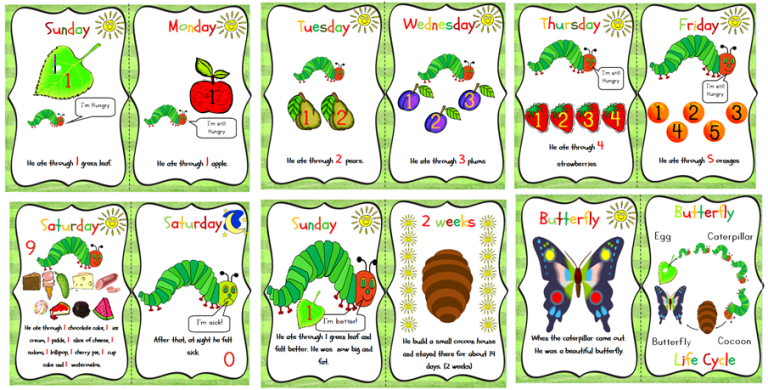
A metamorphosis is a transition from one entirely different form to another, which can be either physical or psychological (with psychological changes being more similar to symbolic alterations). A caterpillar changing into a butterfly is the most well-known or typical example of a metamorphosis that occurs in real life. An example of this is a childhood book of mine called "the very hungry caterpillar". This depicts the slow moving pace at which a caterpillar goes through the lifecycle of becoming a butterfly and that although it is slow moving, it is inevitable.
Storyboard showing the lifecycle in 'the very hungry caterpillar'
Front cover of 'the very hungry caterpillar'
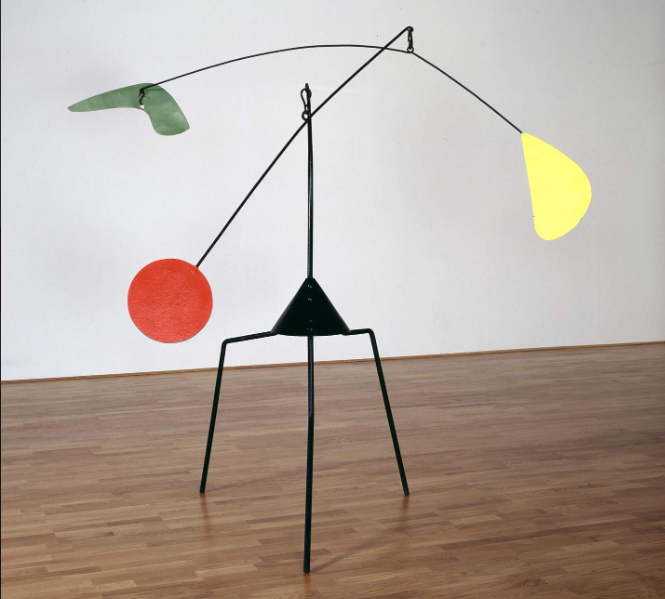
My animation is about the planetary or atomic motion created by sculptor Alexander Calder. Two primary categories of his work comprise his body of work: wire sculptures and hanging mobiles. The most well-known of his creations, which will be pertinent to my animation, are his mobile phones. They are constructed from industrial materials like steel or aluminium, taking on abstract shapes. Bold, solid primary colours are frequently employed, with red, yellow, blue, and black being the most frequently used. His work has a planetary quality that prompted me to design a solar system based on his delicate flying mobiles that resemble planets in their orbit. I will then create a transformation into something entirely different using the rounded shapes of the planets and solar system.
A sculpture by Alexander Calder shown at the Tate Gallery
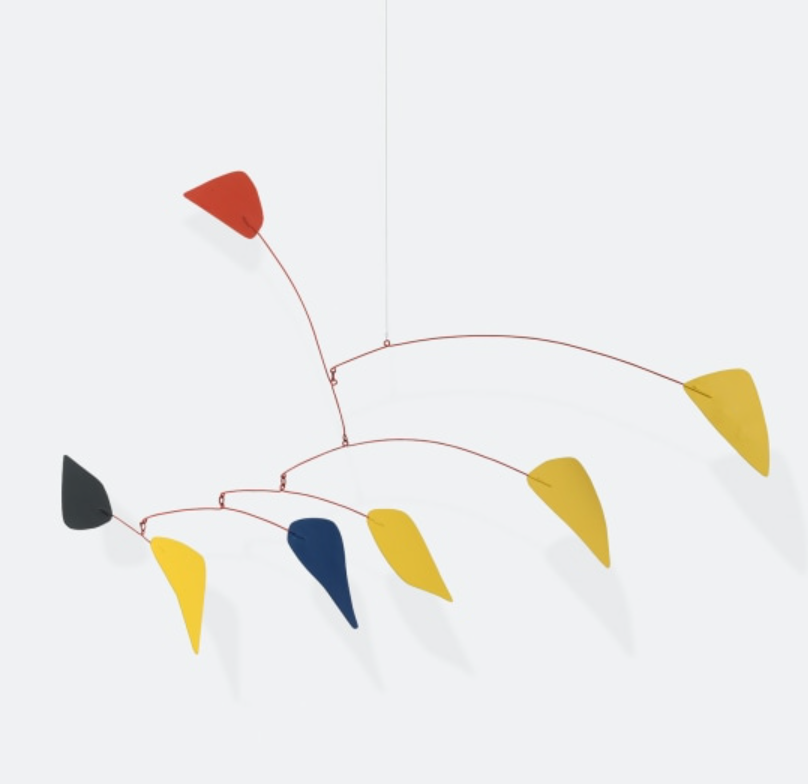
Plutôt Jaune, 1965 by Alexander Calder
In Calder's mobiles, each bar hangs onto another, giving them a more distinct shape and greater range of motion than a regular mobile, which has all the objects hanging from one height or ring/bar. This allows for the formation of more interesting shapes. This was based on the fact that Calder was a qualified mechanical engineer and was therefore interested in physics, particularly as it related to the balance and counterbalance of the shapes he would hang and their spatial relationships.
For my animation and my conceptual idea, I will introduce children who are amazed by space, watching a movie in the cinema about the planets and the solar system, the screen will zoom into their heads and the round shapes will turn into planets, circling around planet earth, towards the end the plants will circle faster and zoom back out to a child's eye glistening and there will be a shadow of a baby, this will represent the cycle of life and how small us humans are in comparison to the planets and the galaxy.
Calder, Alexander (1965) Plutôt Jaune [Image]. Available online: https://www.artnet.com/artists/alexander-calder/plut%C3%B4t-jaune-MrAWjzQRQ7La8psZYwEZZw2 [Accessed: 17/09/2024]
Tate (2024) Who is Alexander Calder? [Article]. Available online: https://www.tate.org.uk/art/artists/alexander-calder-848/who-is-alexander-calder [Accessed: 17/09/2024]