Five design principles for communicating data and information are outlined by Edward Tufte in his book Envisioning Information. These five concepts are: Layering and Separation; Micro/Macro Readings; Colour; Storytelling over Space and Time; and Small Multiples.
I'm going to use these theories in my own work to improve the content in my animation and tell a more interesting story.
I'll start with small multiples and work my way up to larger spheres to help the spectator distinguish between each planet because they all have similar features. This will allow uninterrupted and quick separation between the planets for the viewer. Also, I intend to choose deliberate colours to establish identification, for instance, I plan to tint Mars red and earth blue and green, this will clearly show which planet is which, connecting to Tufte's colour theory.
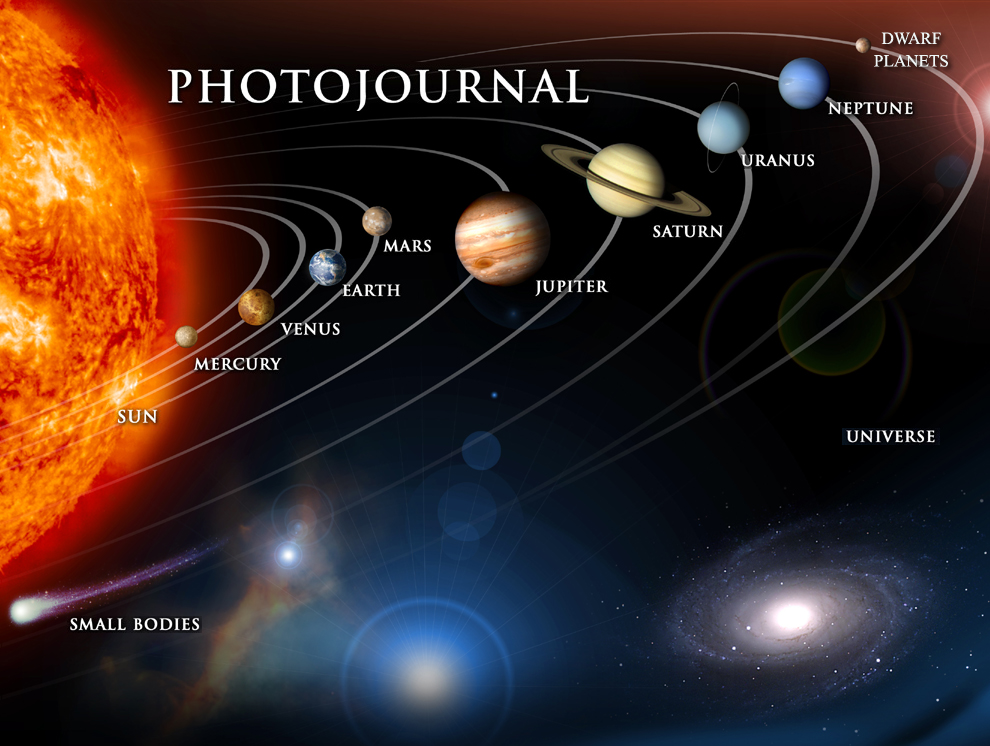
This image by NASA depicts the solar system and how the planets differ from eachother in size and colour, this reinforces Tuftes' principle of layering also, as the image gives the impression, through the orbital rings, that the solar system has different layers that make it whole.
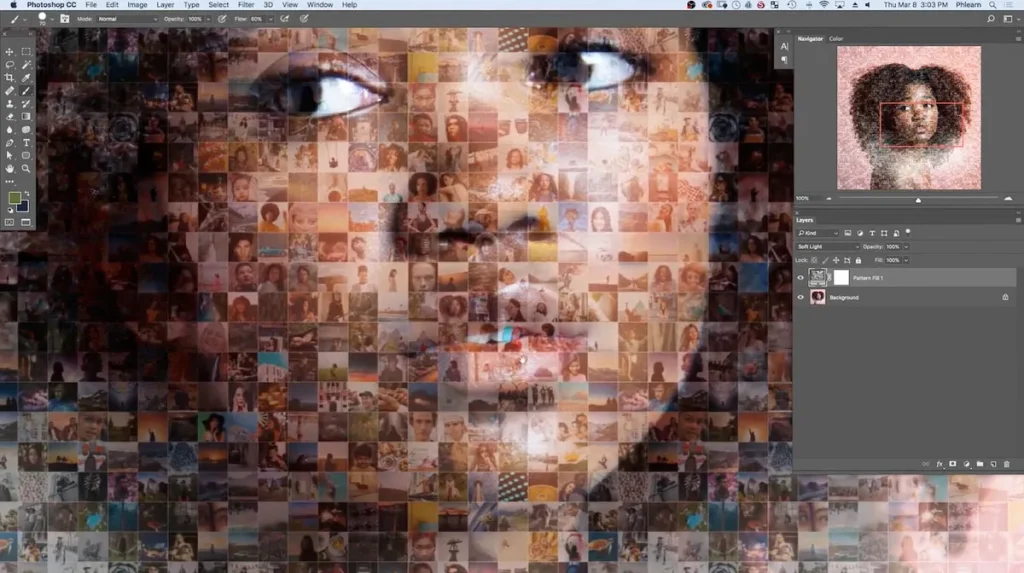
His third idea involves micro-macrocosms, which are small characteristics contained within a much bigger feature. An example of this would be mosaic-style photos, which appear to be one vast image from a distance, but upon closer inspection reveal individual images that create the main image.
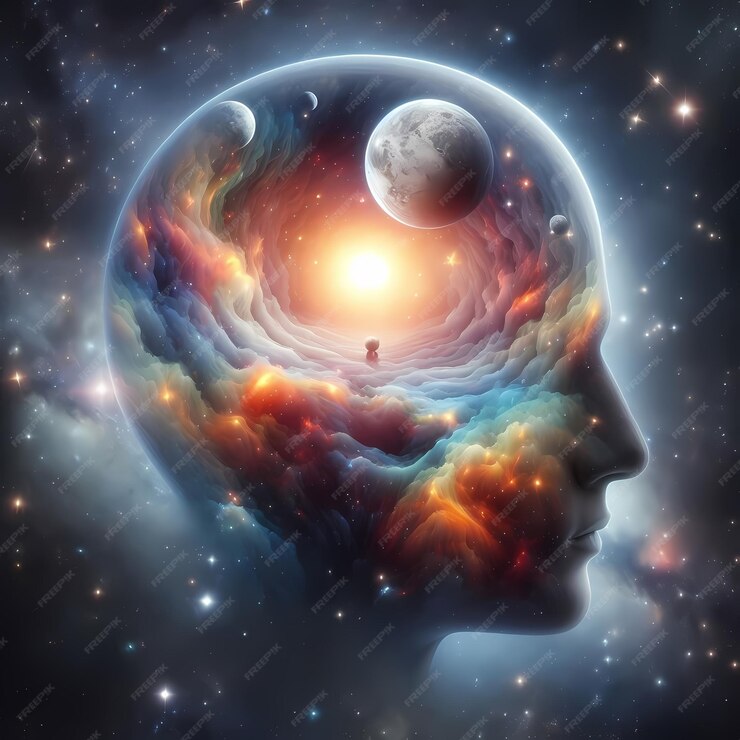
This image within the persons head has inspired me for my animation as I wish to show what the child is thinking before it zooms in to show the planets orbiting around planet earth. I'm going to use a variety of small components to create a larger setting in order to incorporate the principle of micro/macro readings. Using celestial objects like stars, meteors, and comets, I will draw a picture of a galaxy. However, clarity can also bring separation , therefore I was also thinking of using a more simple background so that the planets and main elements can stand out rather a noisy background distracting the viewer. He claims that by eliminating excessive visual clutter, his fourth theory—the use of layering and separation to promote visual clarity—can be implemented. The usage of straightforward backgrounds like stars, meteors, and comets will allow me to include this theory of his into my designs.
Lastly, I will be constructing a change between two forms in order to build a narrative that spans both space and time. I will use the focus on the childs eye to do this where there will be the shadow of a baby and it will represent how the world goes around, as does the circle of life whilst us humans stay in awe of the endless universe out there.
Nasa.gov. (2020). Photojournal: NASA’s Image Access Home Page. [online] Available at: https://photojournal.jpl.nasa.gov/.
Freepik. (2024). Space and Planet Within the Mind Spiritual Art | Premium AI-generated image. [online] Available at: https://www.freepik.com/premium-ai-image/space-planet-within-mind-spiritual-art_134054026.htm [Accessed 17 Sep. 2024].
PHLEARN. (n.d.). How to Create a Photo Mosaic in Lightroom & Photoshop. [online] Available at: https://phlearn.com/tutorial/photo-mosaic/.